Spalling & Scaling Repair — Denver Metro
Concrete Spalling & Scaling Repair in Denver Metro — Fix Salt and Freeze-Thaw Damage Before It Reaches the Rebar
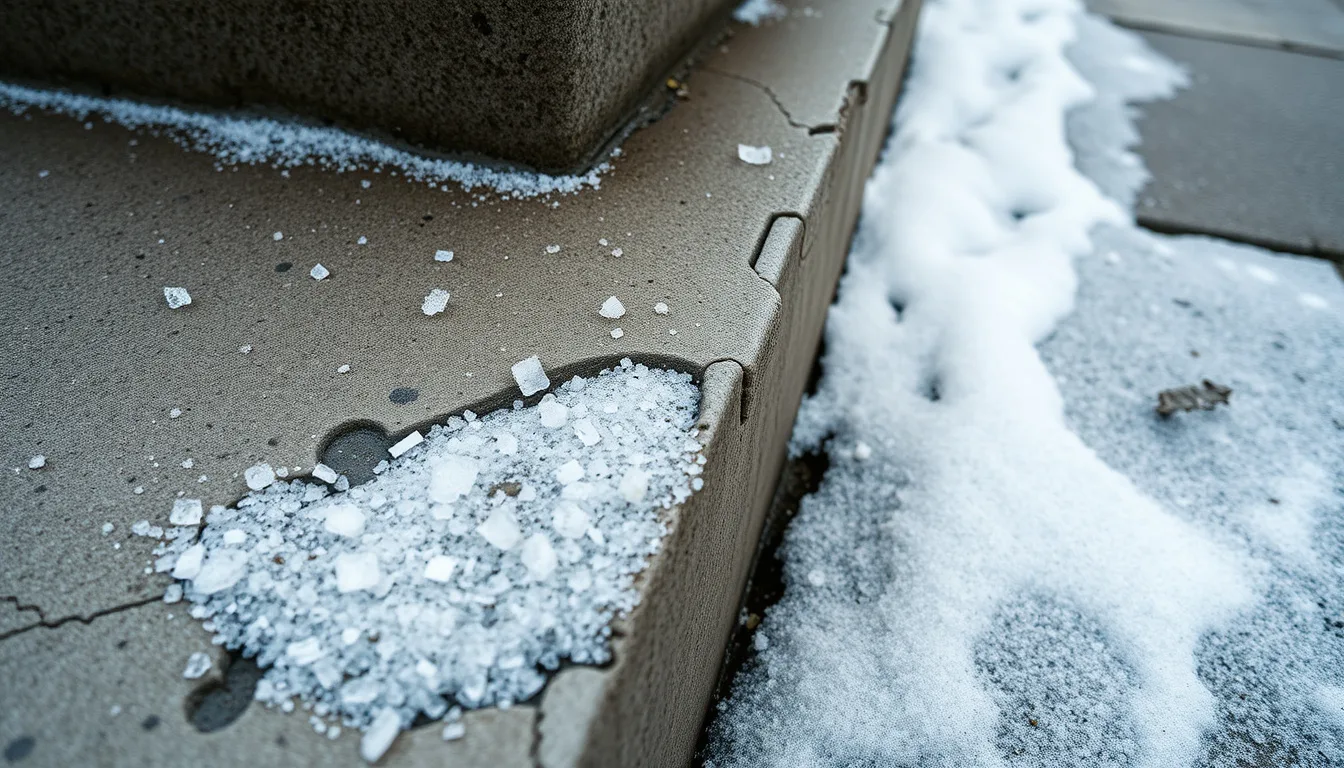
Flaking surface scale on a Denver driveway or walk isn't just cosmetic — it's the first stage of a de-icing-salt damage cycle that ends in cracked, spalled concrete around corroding rebar.
Scaling vs. Spalling: Two Stages of the Same Problem
Scaling is the surface layer of a slab flaking, peeling, or powdering away, usually starting as a rough, pitted patch that exposes the aggregate underneath. It's the earliest visible sign of freeze-thaw and de-icing-salt damage, and on its own it's cosmetic — annoying, not structural.
Spalling is what scaling turns into if it's left alone. Instead of a thin surface layer flaking off, whole chunks of concrete break away, often at edges, joints, corners, or directly over embedded rebar. Once you're seeing spalling rather than scaling, the damage has usually moved from the surface into the concrete's structural layer, and the repair scope changes accordingly.
On Denver-metro driveways and sidewalks, we see both stages constantly, often on the same slab — scaling near the street where salt spray collects, and spalling starting at a joint a few feet in where water has had years to work its way deeper.
How Denver's De-Icing Salt Actually Damages Concrete
Denver-area municipalities and most homeowners use magnesium chloride (MgCl2) and, less commonly, calcium chloride (CaCl2) to melt ice on driveways, walks, and roads through the winter. Both are standard Front Range winter chemistry, but they are not equally hard on concrete: in controlled scaling tests, a 4% MgCl2 solution produced a moderate scaling rating around 3.1, while a 4% CaCl2 solution rated only about 1.6 — meaningfully milder.
The mechanism matters more than the chemical name. Chloride de-icers increase the amount of water held inside a slab's pore structure, which means there's more water available to freeze and expand during each of Denver's roughly 149 annual freeze-thaw cycles. The salt isn't just sitting on top of the concrete — it's changing how much water gets trapped inside it, compounding every freeze cycle that follows.
In a dense Denver-metro neighborhood, driveways and sidewalks get salted heavily and repeatedly every winter, often by more than one source — the homeowner, a snow-removal service, and city plow spray reaching the apron near the street. That concentrated, repeated salt exposure on tight urban lots is exactly why scaling shows up so consistently on inner-metro flatwork.
Why Untreated Scaling Turns Into Structural Spalling
Chloride ions from de-icing salt don't stop at the surface — over years, they migrate down through the concrete to embedded steel rebar. Once they reach it, they break down the passive oxide layer that normally protects the steel from corrosion, and the rebar starts to rust.
Rust occupies significantly more volume than the steel it replaces. As corrosion spreads along a bar, the expanding rust cracks and eventually blows out the surrounding concrete from the inside, which is what produces the chunk-breaking-away pattern of true spalling. MgCl2 is reported as more than twice as corrosive to stainless steel and up to 10 times more corrosive to mild steel than CaCl2, which is why the choice of de-icer matters for a slab's long-term life, not just this winter's ice.
This is the core reason we don't recommend waiting on visible scaling: the damage you can see on the surface is usually years ahead of the corrosion already happening at the rebar level underneath it.
Repair Methods by Severity
Early-stage scaling on a structurally sound slab is typically fixed with a surface patch or thin resurfacing layer, bonded directly to the cleaned and profiled existing concrete. This restores a smooth, even surface without touching anything below it.
Once spalling has exposed or corroded rebar, the repair has to go deeper: chipping out the damaged concrete around the affected bar, cleaning or treating the exposed steel, and patching back with rebar work included so the repair actually bonds to sound material rather than sitting on top of compromised concrete.
For slabs with scaling or spalling spread across a wide area rather than isolated spots, a bonded overlay resurfaces the whole surface in one pass. And for concrete that's spalled through a large percentage of its thickness or has extensive corroded reinforcement, full demolition and recast is the honest answer — patching a slab that's structurally gone just delays a bigger bill.
- Surface patch (scaling, sound base): $20–$50 per sq ft
- Patch with rebar cleaning/treatment (early spalling): $50–$150 per sq ft
- Bonded overlay (widespread scaling): $30–$80 per sq ft
- Full demolition and recast (severe spalling): $150–$400+ per sq ft
Preventing the Next Round of Damage
The single highest-leverage prevention step is sealing exposed concrete before winter. A penetrating sealer reduces how much water and chloride solution the pore structure can absorb in the first place, which slows both the freeze-thaw expansion and the chloride migration toward rebar that drive scaling and spalling.
The second lever is de-icer choice. Where it's practical, switching from magnesium chloride to calcium chloride — or to a sand-based traction product on the coldest days when chemical melters barely work anyway — measurably reduces long-term scaling versus MgCl2's roughly 3.1 damage rating. Neither change eliminates freeze-thaw exposure on a Denver-metro property, but together they meaningfully slow the clock on new damage.
What Spalling and Scaling Repair Costs in Denver Metro
Pricing scales directly with how deep the damage has gone, which is why an accurate quote requires an on-site look rather than a phone estimate. Surface-only scaling on a sound slab is the cheapest fix per square foot; spalling with exposed or corroded rebar costs more because it requires structural work, not just a cosmetic patch; and a slab that's spalled through most of its depth is often more economical to demo and recast than to keep patching.
We'll always tell you which tier your damage actually falls into before quoting, since the visible scale on the surface doesn't always match the severity of what's happening underneath — that's exactly why we inspect before we price.
Free Spring Damage Inspection Across Denver Metro
Spring is when winter's scaling and spalling damage becomes fully visible across Denver-metro driveways, walks, and patios — and it's the ideal window to repair it before summer heat and next winter's salt add another round of damage on top.
Get in touch through our contact form for a free inspection. We'll identify whether you're looking at surface scaling or structural spalling, check for exposed rebar, and give you a fixed price by repair tier before any work starts.
We serve Denver, Aurora, Lakewood, Arvada, Westminster, Thornton, Centennial, Highlands Ranch, Littleton, Englewood, and Wheat Ridge — the same dense urban corridor that sees the heaviest annual de-icing salt application on the Front Range.
Spalling & Scaling Repair FAQs
Straight answers before we drill
Scaling is the surface layer flaking or peeling away, exposing the aggregate underneath — it's cosmetic and usually the earliest visible sign of freeze-thaw and de-icing-salt damage. Spalling is more severe: whole chunks of concrete break away, often because corroding rebar underneath is cracking the surrounding concrete from the inside.
Yes. Magnesium chloride (MgCl2), the most common Front Range de-icer, produces a moderate scaling rating of about 3.1 in controlled tests versus about 1.6 for calcium chloride (CaCl2), and MgCl2 is reported as up to 10 times more corrosive to mild steel rebar than CaCl2. Switching de-icers where practical, or sealing your concrete, measurably slows future scaling.
Surface-only scaling patches typically run $20–$50 per square foot, patches involving rebar cleaning or treatment run $50–$150 per square foot, bonded overlays for widespread scaling run $30–$80 per square foot, and full demolition and recast for severe spalling runs $150–$400-plus per square foot.
Sealing slows future damage but doesn't reverse existing scaling or repair spalling that's already exposed rebar. We recommend repairing the current damage first, then sealing the restored surface so it's protected going into the next winter.
Visible chunks breaking away, rust staining on the concrete surface, or a hollow sound when you tap the slab near a joint or edge are all signs corrosion has already started underneath. A free on-site inspection is the reliable way to confirm it before we quote a repair.
Cracked, sinking, or salt-damaged concrete? Get a fixed price before we drill.
Free inspections across the Denver metro. We diagnose freeze-thaw, de-icing salt, and expansive bentonite-clay causes before recommending a repair.