Driveway Repair — Denver Metro
Driveway Repair in Denver Metro — Crack, Scaling, Heave, and Leveling Fixes
Driveways take the worst of everything Denver's climate throws at concrete. We diagnose the actual cause first, then fix it with the right method — not a generic patch.
Why Driveways Take the Worst of Every Denver Damage Mechanism at Once
No surface on a Denver-metro property absorbs more punishment than the driveway, because it's exposed to all three local damage mechanisms simultaneously. It gets the heaviest de-icing salt exposure of any surface on the lot — applied directly by the homeowner, tracked further by tires, and often hit again by snowplow spray near the street. It takes the heaviest freeze-thaw joint stress of any flatwork, since vehicle weight flexes control joints that are already being pried open by roughly 149 annual freeze-thaw cycles. And the approach slab near the garage sits directly over the same expansive Pierre Shale clay that heaves and settles seasonally under every other structure on the lot.
Because all three mechanisms are active on the same slab at the same time, driveway damage tends to show up faster and in more varied forms than damage on a patio or side walkway that only takes one or two of these hits. That's also why diagnosing which mechanism is driving a given symptom matters more here than almost anywhere else on the property.
Reading the Symptoms: Which Cause Is Doing What
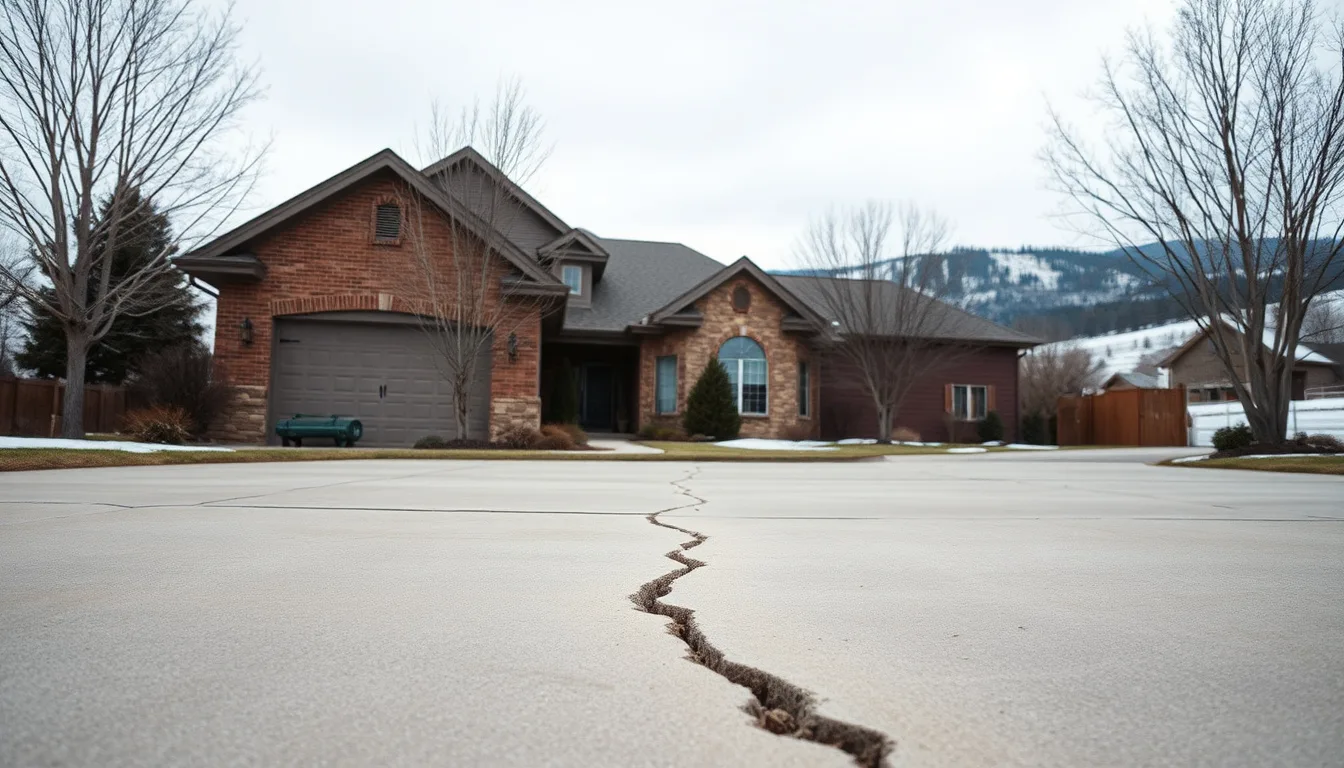
Cracking that runs diagonally from a corner or changes width along its length, especially paired with a visible step at a joint, usually points to expansive clay movement under the slab — the driveway is being pushed unevenly rather than just aging.
Flaking, pitted, or powdery surface texture, especially concentrated near the street or garage apron where salt collects, points to de-icing-salt scaling. If you're also seeing small chunks breaking away rather than just surface flaking, that scaling has likely progressed into spalling around corroding rebar.
A sunken section, a lip at a control joint, or a gap where the driveway has pulled away from the garage slab points to lifting and leveling as the fix, since the concrete itself may still be structurally sound — it's just out of position.
The Decision Tree: Crack Injection, Scaling Repair, Resurfacing, or Lifting
Active or structural cracks get epoxy injection if the crack has stopped moving, or flexible polyurethane injection if it's still opening and closing with seasonal clay movement. Hairline cosmetic cracks just need surface caulking to keep water out before freeze-thaw makes them worse.
Surface scaling on an otherwise sound driveway gets a patch or resurfacing layer; spalling with exposed or corroded rebar needs deeper repair work that cleans and treats the steel before patching back. Widespread wear across the whole driveway, or a desire for a decorative upgrade, points toward a full resurfacing overlay instead of spot repairs.
A driveway that's uneven but structurally intact gets lifted back to level — polyurethane foam on most Denver-metro clay soil, mudjacking where cost matters more than the added weight. We walk each of these branches with you during the inspection rather than defaulting to a single fix for every symptom.
Cost Bands by Repair Method
Because a driveway repair can land in any of four different categories depending on what's actually wrong, cost varies more here than on a single-purpose service. Crack injection runs roughly $5 to $25-plus per linear foot depending on width and method. Scaling and spalling repair runs $20 to $150-plus per square foot depending on whether rebar work is needed. Resurfacing runs $3 to $20 per square foot depending on whether it's a standard or decorative finish. Lifting and leveling runs $3 to $25 per square foot depending on mudjacking versus polyurethane foam.
We give one fixed price after inspecting the actual driveway, not a range quoted over the phone, because most driveway jobs combine at least two of these repair types rather than needing just one.
Sealing Your Driveway Ahead of Denver Winters
A sealed driveway absorbs meaningfully less water and de-icing salt into its pore structure, which slows both freeze-thaw scaling and the chloride-driven rebar corrosion that eventually causes spalling. On a surface that's going to be salted every winter regardless, sealing is one of the cheapest, highest-leverage maintenance steps a Denver-metro homeowner can take.
We recommend sealing after any crack, scaling, or resurfacing repair, and resealing an already-sound driveway every 2 to 3 years — timed for late summer or early fall so the sealer has fully cured before the first freeze.
The Garage Apron and Approach Slab: A Recurring Trouble Spot
The section of driveway closest to the garage — the approach slab — sees a disproportionate share of Denver-metro driveway repairs, and for a specific reason: it sits at the transition between the garage's foundation (often on drilled piers reaching stable bedrock) and the driveway slab, which isn't. When the clay underneath the driveway heaves or settles seasonally and the garage foundation doesn't move with it, that transition point takes the stress, producing cracking, a stepped joint, or a gap right at the garage opening.
This is one of the more common single-repair requests we get across Denver-metro subdivisions, and it's usually addressed with either crack injection or a small lifting job at just that section, rather than requiring work across the whole driveway.
Get Your Driveway Estimate in Denver Metro
Send us photos of the damage and your city, or book a free on-site inspection anywhere across the Denver metro. We'll diagnose which of Denver's three damage mechanisms is driving your specific problem, walk you through the repair options, and give you one fixed price before any work starts.
Get in touch through our contact form. We serve Denver, Aurora, Lakewood, Arvada, Westminster, Thornton, Centennial, Highlands Ranch, Littleton, Englewood, and Wheat Ridge — including HOA-governed subdivisions where matching the existing driveway's finish and color is part of the job.
Driveway Repair FAQs
Straight answers before we drill
Driveways take all three of Denver's main damage mechanisms at once — heavy de-icing salt exposure, vehicle-load freeze-thaw stress at the joints, and expansive clay movement under the approach slab — while a patio typically only sees one or two of those. That combination is why driveways tend to show damage sooner and in more varied forms.
It comes down to the symptom. Cracks that change width or run diagonally usually need injection. Flaking or pitted surface texture needs scaling repair or resurfacing. A sunken section or a step at a joint needs lifting. Most driveway jobs actually combine two of these, which is why we inspect before recommending a fix.
It depends on the repair type: crack injection runs roughly $5–$25-plus per linear foot, scaling or spalling repair runs $20–$150-plus per square foot, resurfacing runs $3–$20 per square foot, and lifting/leveling runs $3–$25 per square foot. We give a single fixed price after an on-site inspection since most driveways need more than one repair type.
Every 2–3 years is typically sufficient for a well-installed sealer, timed for late summer or early fall so it fully cures before the first freeze. Sealing more often than that isn't usually necessary unless the surface is showing visible wear sooner.
The garage apron sits at the transition between your garage's foundation — often on drilled piers into stable bedrock — and the driveway slab, which isn't. When Denver's expansive clay heaves or settles seasonally, that transition point takes the stress, which is why cracking and stepped joints concentrate right at the garage opening.
Cracked, sinking, or salt-damaged concrete? Get a fixed price before we drill.
Free inspections across the Denver metro. We diagnose freeze-thaw, de-icing salt, and expansive bentonite-clay causes before recommending a repair.