GARAGE & INTERIOR SLAB REPAIR
Denver Garage & Interior Slab Repair — Winter Salt Damage Doesn't Stop at the Door
Every Denver winter, de-icing chloride rides in on your tires and concentrates on the one slab that never gets rinsed off by rain — your garage floor.
The Garage Floor Is an Indoor Surface With Outdoor Damage
Homeowners across the Denver metro generally assume an interior slab is protected from the weather damage that hits a driveway or sidewalk, and structurally that's mostly true — a garage floor doesn't see direct freeze-thaw cycling the way exposed flatwork does. But it's exposed to something a driveway rinses off naturally and a garage floor never does: concentrated de-icing chloride, tracked in on tires all winter long and left to sit.
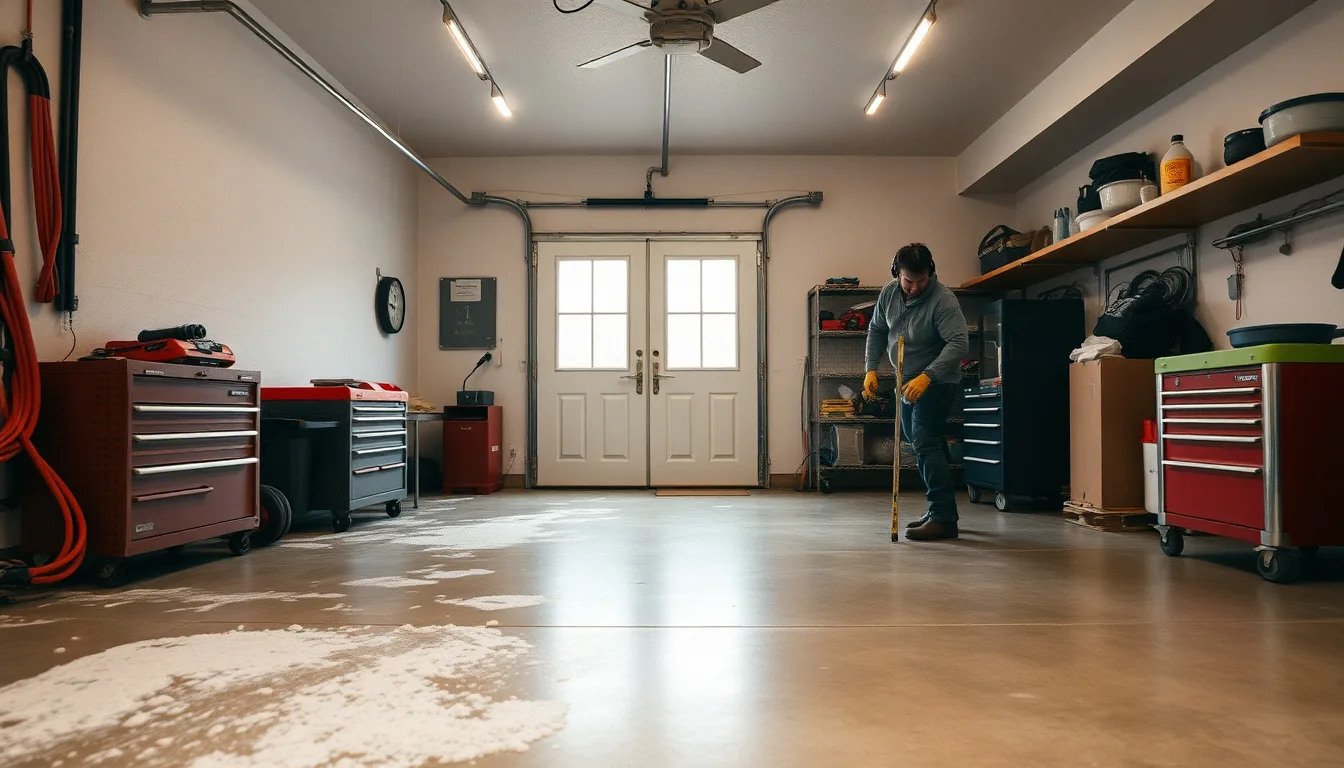
Every trip out during a Denver snow event picks up magnesium chloride or calcium chloride residue from treated roads and driveways, and every trip back into the garage deposits a fresh dose on the same handful of square feet under each tire. Rain never washes it away, and most homeowners don't hose down a garage floor the way they'd naturally rinse a driveway after a storm — so chloride concentration on an interior slab can actually build up worse over a season than on the exposed surfaces outside.
Why Concentrated Salt Still Scales an Indoor Slab
Denver's common de-icers behave differently on concrete, and the difference matters even indoors. Lab testing shows magnesium chloride at 4% concentration produces moderate surface scaling around a 3.1 rating, compared to roughly 1.6 for an equivalent calcium chloride solution. Concentrated in isolated tire-track zones on a garage floor rather than spread thin across an open driveway, that same chloride does its damage in a tighter, more visible pattern — the pitted, flaking scale spots many Denver garage owners notice right under where the tires sit.
Chloride exposure doesn't stop at surface scaling. Chloride ions that penetrate down to embedded rebar or wire mesh break down the steel's protective oxide layer and start corrosion, and corroding steel expands as it rusts, which can crack the slab from the inside out over several seasons — a slower-developing but more serious version of the same salt damage a sidewalk or driveway takes on the surface.
The Apron: Where Garage Damage Meets Expansive Clay
The garage slab itself usually sits on a well-compacted pad, but the apron — the transition section where the garage floor meets the driveway just outside the door — often behaves more like driveway flatwork, sitting closer to Denver's expansive Pierre Shale clay and subject to the same 2-to-6-inch seasonal swelling that moves driveways and sidewalks.
That's why apron cracking and heave is one of the most common garage-adjacent complaints we see: a visible step or gap forms right at the threshold where the interior slab meets the exterior apron, sometimes wide enough to let water track into the garage during a storm. Because the apron and the garage floor are structurally distinct pours even though they look continuous, that transition crack rarely means the interior slab itself is compromised — it's almost always the apron's own soil movement.
Scaling and Spalling: Reading What the Damage Is Telling You
Light scaling shows up as a rough, flaking surface texture, usually confined to the tire-track zones where chloride concentrates most — cosmetic at first, but a signal that the surface layer of paste has started to deteriorate. Left alone through more winters, that scaling can progress to spalling, where chunks of the surface actually break away, sometimes exposing aggregate or, in more advanced cases, corroding rebar underneath.
Hairline and structural cracking are a separate but related issue — cracks let water and chloride solution penetrate deeper into the slab between visits, accelerating both the freeze-related expansion inside the concrete and the rebar corrosion process. Catching scaling before it becomes spalling, and cracking before it becomes structural, is almost always cheaper than waiting for the slab to need a full section replacement.
Repair Options: Patch, Resurface, Coat, or Lift
Isolated cracks get sealed or epoxy-injected depending on width and depth, stopping further water and chloride penetration without touching the rest of the floor. Broader surface scaling across the tire-track zones is typically a resurfacing job — a bonded overlay restores a smooth, level surface over the damaged paste layer.
For garage floors that see heavy winter traffic, an epoxy coating applied after any needed patching or resurfacing acts as a protective topcoat going forward — sealing the surface against future chloride penetration so next winter's tracked-in salt doesn't restart the same scaling cycle. At the apron, where the issue is usually heave or a stepped transition rather than surface damage, polyurethane foam lifting levels the apron back to a flush, safe transition with the garage floor.
Typical Garage Slab Repair Costs
Crack repair on interior slabs follows standard flatwork pricing: hairline cracks run roughly $5 to $8 per linear foot for sealant, wider cracks needing chiseled filler run about $8 to $15 per linear foot, and structural cracks with epoxy injection run $15 to $25-plus per linear foot. Resurfacing to correct scaling is typically priced per square foot based on the overlay system and the area affected.
Epoxy coating as a protective topcoat is usually quoted separately per square foot and depends on the coating system and any surface prep required. Apron lifting and leveling is priced by the job based on the size of the affected transition and how much foam injection is needed to restore a flush grade. Every job gets a fixed quote after an on-site inspection.
Free Garage & Apron Inspections Across the Denver Metro
If your garage floor is showing pitted, flaking spots under the tire tracks, or your apron has a visible step where it meets the driveway, we'll inspect both — the interior slab for scaling, spalling, and cracking, and the apron for heave tied to Denver's expansive clay. We serve Denver, Aurora, Lakewood, Arvada, Westminster, Thornton, Centennial, Highlands Ranch, Littleton, Englewood, and Wheat Ridge.
Get in touch through our contact form to schedule a free inspection and stop next winter's tracked-in salt from doing another season of damage to the same tire-track zones.
Garage & Interior Slab Repair FAQs
Straight answers before we drill
The damage isn't from direct weather exposure — it's from de-icing chloride tracked in on your tires all winter and left to concentrate in the same tire-track zones, since rain never rinses an interior floor the way it rinses a driveway. That concentrated magnesium chloride or calcium chloride residue causes the same surface scaling seen on exposed flatwork, just in a tighter, more visible pattern.
That's almost always the apron — the transition slab just outside the garage door — moving independently of the garage floor itself, driven by seasonal swelling in Denver's expansive Pierre Shale clay underneath it. The apron and garage floor are separate pours even though they look continuous, so a threshold crack usually doesn't mean the interior slab is structurally compromised.
An epoxy coating works best as a protective topcoat applied after any needed crack repair or resurfacing — it seals the surface against future chloride penetration so next winter's tracked-in salt doesn't restart the same scaling cycle. It's not a fix for existing structural cracks or heave; those need to be addressed first.
Scaling looks like a rough, flaking surface texture, usually cosmetic at first. Spalling is more advanced — chunks of the surface have actually broken away, sometimes exposing aggregate or corroding rebar underneath. If you can see loose or missing chunks of concrete rather than just surface roughness, it's likely progressed to spalling and worth an inspection before it spreads further.
Yes, and we typically inspect both together since they're closely related but structurally distinct. The garage floor's issues are usually salt-scaling or cracking; the apron's issues are usually heave or settlement tied to expansive clay movement. We'll identify which repair applies to which section during the inspection.
Cracked, sinking, or salt-damaged concrete? Get a fixed price before we drill.
Free inspections across the Denver metro. We diagnose freeze-thaw, de-icing salt, and expansive bentonite-clay causes before recommending a repair.