Why Does Denver Concrete Crack So Much? The Bentonite Clay Problem Behind Metro Driveways and Patios
Drive through almost any established Denver-metro subdivision — Aurora, Lakewood, Arvada, Centennial, it doesn't matter which — and you'll notice the same thing house after house: a cracked driveway here, a tilted patio slab there, a front walk with a lip that catches your toe every fall. Ask the homeowner about their foundation and most of the time they'll tell you it's fine. No wall cracks, no sticking doors, nothing. So why is all that flatwork falling apart on houses with perfectly good foundations?
The short answer is soil. The longer answer is why Denver's particular pattern of dense, concrete-heavy subdivisions turns an ordinary geology problem into one of the most common repair calls we get across the metro.
The Pierre Shale Story
Underneath most of the Denver metro area sits a rock formation called Pierre Shale, a marine clay-shale deposited during the Late Cretaceous period, roughly 70 to 100 million years ago, back when an inland sea covered this part of the Front Range. Pierre Shale is mostly illite and smectite clay layered with quartz, but the detail that matters to your driveway is how it got its worst ingredient: periodic volcanic ash falls settled into that ancient seabed and, over millions of years, weathered into concentrated bands of smectite — the mineral Front Range residents and contractors just call bentonite.
The specific clay mineral doing the damage is montmorillonite, bentonite's technical name. In its pure form, montmorillonite can swell to as much as 15 times its dry volume when saturated. Real Denver-metro soil is never pure montmorillonite — it's blended with other material — so actual swelling on most properties runs closer to 1.5 times dry volume. That sounds modest next to the 15x lab number, but it's still more than enough force to crack a driveway slab, tip a patio, or buckle a sidewalk joint. This isn't a rumor passed around at the hardware store — it's a documented geologic hazard tracked by the Colorado Geological Survey, and it's the reason Denver-metro concrete failure follows such a predictable pattern from neighborhood to neighborhood.
The Swell-Shrink Cycle
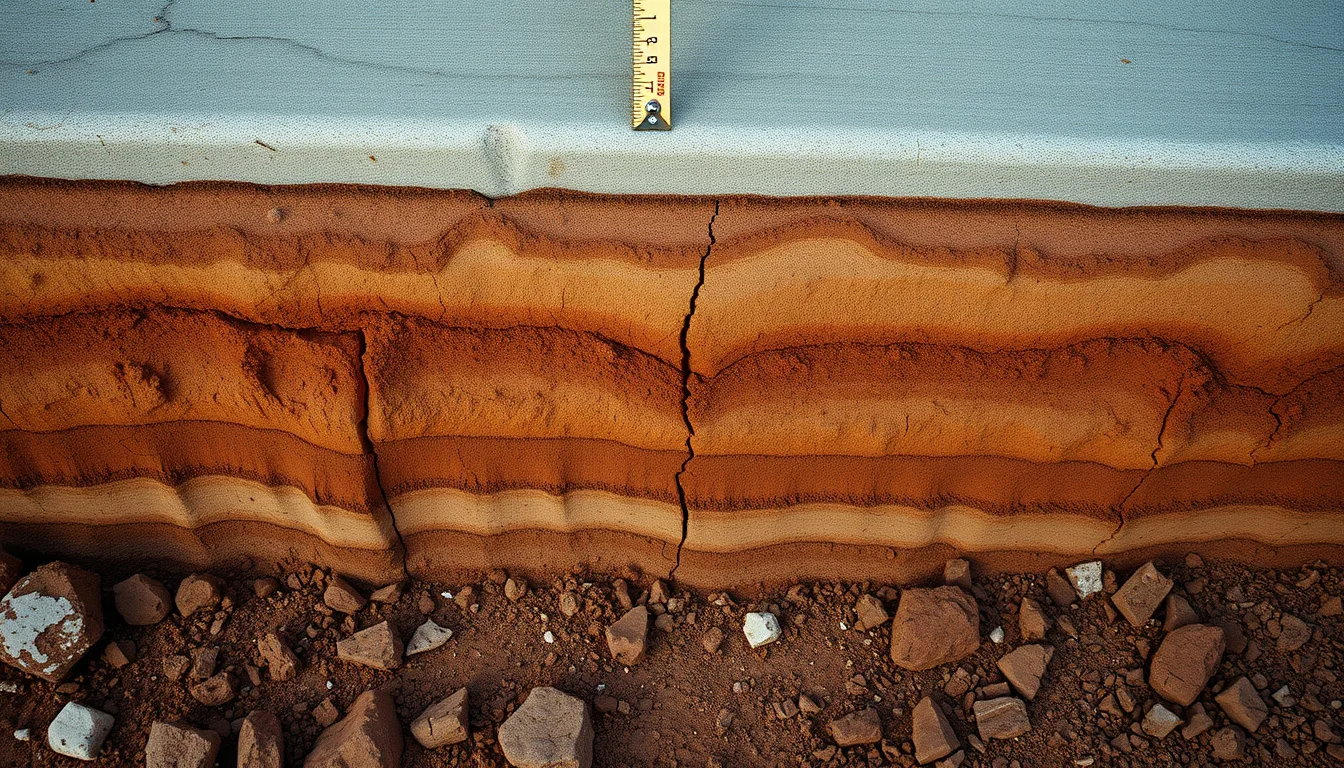
Bentonite clay acts like a sponge that never quite dries out evenly. When moisture reaches it — spring runoff, a wet monsoon week in August, a sprinkler head running too close to the slab edge — the clay absorbs water and expands, pushing up against anything resting on top of it. When conditions dry out later in the season, the same clay shrinks back down, leaving a gap where it used to press firmly against the underside of the slab.
That swell-shrink cycle isn't a one-time event, and it isn't small. Documented seasonal ground movement in Denver-metro areas with active clay runs roughly 2 to 6 inches between the wet and dry extremes of a given year. Six inches of vertical movement under a driveway or patio is enough to crack a slab outright, lift one edge while the other stays put, or slowly tilt an entire pad toward or away from the house. Because the cycle repeats every year, a slab that cracked once from clay movement almost always keeps moving unless something intervenes.
Why Your Foundation Is Fine but Your Driveway Isn't
This is the detail that trips up most Denver-metro homeowners: your house and your driveway were never built the same way, and that's by design.
Builders across the Denver metro have dealt with expansive clay for decades by setting houses on drilled pier foundations — deep concrete piers that punch straight through the unstable clay layer and anchor into stable bedrock well below it. Once a house is resting on piers reaching bedrock, the clay swelling and shrinking around those piers mostly doesn't affect the structure above, because the house isn't actually sitting on the clay — it's suspended on rock far beneath it.
Your driveway, patio, front walk, and garage slab don't get that treatment. Exterior flatwork is essentially never built on piers — it's poured flat, directly on grade, resting right on top of the same bentonite-bearing clay your house foundation was specifically engineered to bypass. The house holds still while the concrete around it rides the seasonal swell-shrink cycle. That mismatch — not sloppy pouring or bad concrete — is why a home with a rock-solid, problem-free foundation can still have a driveway that cracks and heaves year after year.
The Urban-Density Multiplier
Here's the part that's specifically a Denver-metro story rather than a generic Front Range one: density. Dense inner-ring subdivisions in Aurora, Lakewood, Arvada, Westminster, Thornton, Centennial, and Highlands Ranch pack far more concrete surface area onto each lot than a rural or exurban property ever would. A typical metro lot might carry a full driveway apron, an attached or detached patio, a front walk, side yard pads, and sometimes a second parking pad — all poured directly onto the same active clay belt, all within a few dozen feet of each other on a standard-sized lot.
More concrete per lot, packed closer together across an entire subdivision, means more total slab edges, joints, and expanses exposed to the same swelling soil underneath. That's why cracked and heaved flatwork reads as such a widespread, almost neighborhood-wide complaint across inner Denver-metro subdivisions specifically — it isn't that the clay is worse there than anywhere else on the Front Range, it's that there's simply more concrete sitting on top of it per acre, concentrating the visible damage block after block.
Diagnosis Checklist: Soil, Freeze-Thaw, or Salt?
Denver-metro concrete fails for a few distinct reasons, and they don't all look the same on the surface. Use this checklist to get a read on what's likely driving your damage:
- A slab that visibly tilts or re-levels itself somewhat from season to season — classic expansive clay movement
- One long crack running corner-to-corner, especially near a downspout or sprinkler zone — usually clay-driven, concentrated wherever extra moisture reaches the soil
- Flaking, pitting, or a rough, crumbly surface with little actual movement — points toward freeze-thaw and de-icing salt damage rather than soil movement
- A hairline crack that's widened noticeably each winter — often freeze-thaw compounding on top of an original soil-movement crack
- Movement concentrated where a patio or garage apron meets the foundation — expansive clay is typically most active right where flatwork meets backfill against the stem wall
Most real jobs across Aurora, Lakewood, and the rest of the metro involve more than one of these causes layered together, but identifying the lead cause tells a contractor which repair method will actually hold.
What Actually Helps: Controlling Water
Bentonite clay only swells when it gets wet, so the single most effective thing a homeowner can do between repairs is limit how much water reaches the soil under and around a slab:
- Redirect downspouts away from the foundation and driveway edge instead of letting them dump straight into the soil next to the slab
- Check sprinkler and drip zones near driveways, walks, and patios — daily overspray right at a slab edge feeds the swelling cycle in slow motion
- Grade away from the house and hardscape so surface water sheets off instead of pooling against a slab
- Seal existing cracks so rain and snowmelt can't funnel directly down into the clay through the crack itself
None of that makes the clay stop being expansive. What it does is soften how dramatically the soil swings between wet and dry, which slows the pace of movement and gives any concrete repair a real chance to last.
When Heave Signals Something Bigger
Most cracked and heaved flatwork across the Denver metro is a durability and safety nuisance, not an emergency — but a few signs mean the situation deserves a broader look before anyone starts patching concrete:
- Interior cracks, sticking doors, or sloping floors showing up alongside the exterior heave, suggesting the house foundation itself may be affected
- Several inches of movement in a single season rather than a gradual multi-year trend
- Utility lines, gas meters, or structural elements visibly shifting along with the slab
If any of those apply, the right first call is a geotechnical or structural evaluation, not a concrete crew. Short of that, flatwork driven by clay movement is very treatable.
Matching the Repair to the Symptom
Once soil movement is confirmed as the driver, the repair choice follows naturally:
- Active, moving cracks call for flexible polyurethane sealant rather than rigid epoxy, since a rigid fill can simply crack again next to soil that's still cycling
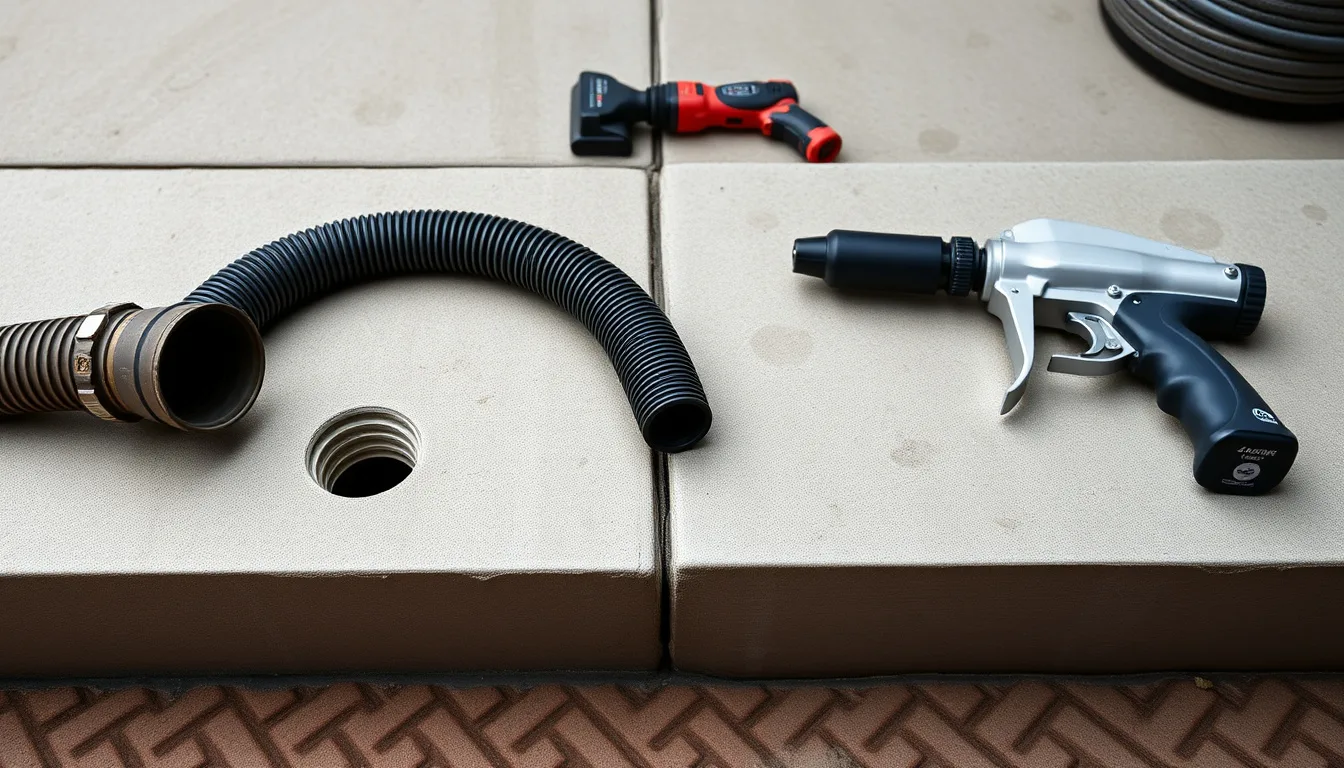
- Heaved or sunken slab sections are candidates for lifting and leveling — polyurethane foam is usually the better call over heavier fill material because it's lightweight and doesn't add new load to soil that's already unstable
- Surface-level cracking without much movement, especially where trip hazards create liability exposure can often be resurfaced once any active cracks underneath are addressed first
Get an Honest Read on What's Under Your Slab
A cracked or heaving driveway anywhere from Aurora to Wheat Ridge is rarely a mystery once someone actually looks at it — it's usually the same Pierre Shale and bentonite clay story, made more visible by how much concrete Denver-metro subdivisions pack onto every lot. We inspect metro properties directly, tell you honestly whether soil movement, freeze-thaw, or salt damage is driving what you're seeing, and recommend the repair that actually matches the cause.
Get in touch through our contact form for a straight answer about what's moving under your concrete.
Frequently Asked Questions
Is bentonite clay only a Denver problem, or does it affect the whole Front Range?
Pierre Shale and its bentonite interbeds run the length of the Front Range, but this article focuses on the Denver-metro pattern specifically — how dense inner-ring subdivisions like Aurora, Lakewood, and Centennial concentrate the visible damage because of how much flatwork sits on each lot.
If my driveway is heaving, does that mean my foundation is at risk too?
Not necessarily. Most Denver-metro homes are built on drilled piers reaching bedrock, which insulates the house structure from the same clay movement affecting unpiered flatwork. Interior cracks or sticking doors alongside exterior heave are the signal that warrants a closer look at the foundation itself.
How fast does bentonite clay damage show up after a house is built?
It varies by lot and drainage, but many Denver-metro homeowners start noticing driveway or patio cracking within the first five to ten years, especially if downspouts or sprinklers are directing extra water toward the slab edge.
Can I stop the clay from swelling permanently?
No — the swell-shrink cycle is a permanent feature of the soil. What you can control is how much water reaches it, which slows the rate and severity of movement and extends how long any given repair holds up.
Ready for a real number?
Free inspections across the Denver metro — measured on site, fixed price before any drilling starts.